

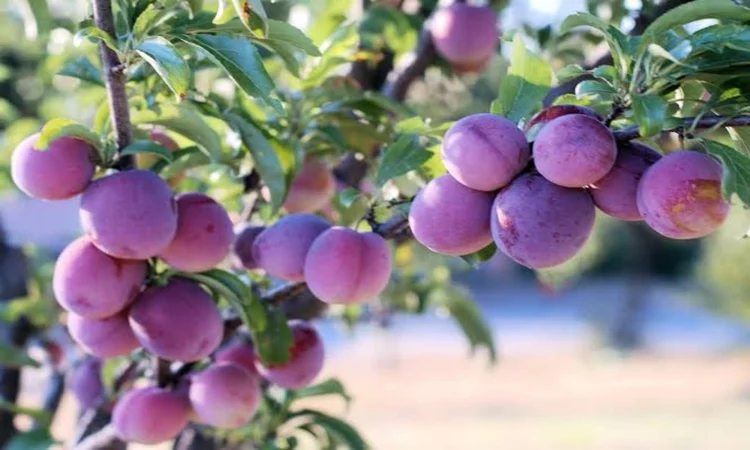

A sheltered town garden and an exposed hillside can share a northern postcode while offering a fruit tree very different lives. One may hold enough warmth to ripen a late apple; the other may lose blossom to wind or run out of useful autumn weather first.
That is why “suitable for the north” needs unpacking. Winter survival, successful flowering and a ripe crop are separate parts of the year. This guide compares ten UK suppliers whose published ranges or regional knowledge help a gardener think through those parts, with particular attention to the actual site rather than a broad line across the map.
Read the year at ground level
The question changes as the year unfolds. A variety may survive winter yet lose its flowers, or set fruit that needs more autumn warmth than the site provides. These suppliers contribute regional growing knowledge, named varieties with useful seasonal information or tree forms that help specify a workable planting. Their published accounts underpin the selection; RHS guidance supplies the wider frost and growing context.
The most helpful site notes concern what happens there: where cold air or wind is troublesome, which positions receive sun and how the soil behaves after rain. A rootstock can influence the tree’s growth, but it cannot make a waterlogged position suitable by itself. Nor does winter hardiness protect open blossom from every spring frost. The aim is to identify the difficult part of the local year, then choose a fruit type and variety with a realistic chance of completing it.
1. Chris Bowers & Sons
A second flush of pear blossom makes Invincible an interesting example in the UK fruit-tree range at ChrisBowers, because its nursery description brings the flowering season into a northern garden’s purchase decision. It offers a specific point to discuss where the first blossom is vulnerable, with Quince C, Quince A and BA29 rootstock options described in the range.
The name should not carry the argument on its own. A further flush may be useful, but it does not make the tree frost-proof or settle whether pears will ripen well in the proposed position. Rootstock, available space and the site’s warmth still shape the choice.
This example shows how to use the wider nursery range. Begin with the part of the year that causes trouble, then compare possible responses across the fruit types. The answer may be a pear with a particular flowering habit, an earlier apple or a different planting position. The objective is a workable orchard choice, with Invincible one candidate in that discussion.
2. Drumfearn Trees
Skye gives Drumfearn a very definite northern context. The nursery grows young trees outdoors on a croft in Sleat, with an interest in fruit suited to the north-west of Scotland.
That makes its account relevant to gardeners dealing with similar regional questions. It does not make every northern site equivalent to the nursery. Shelter, soil and exposure can change over a short distance.
Its information also acknowledges uncertainty about local timings for newer introductions. A buyer should be able to distinguish a variety whose behaviour is well understood there from one still being learned about. Drumfearn offers a direct route to that conversation, with the availability of particular trees and arrangements for visits or purchase settled with the nursery.
3. Scottish Heritage Fruit Trees
Photographs are useful when a postcode says too little. Scottish Heritage invites site information and images to help shape the tree selection, with orchard packs acting as starting points for discussion.
A typical mixture of apples, plums and pears may be appropriate in one position and need adjustment in another. The nursery’s approach gives the actual garden a chance to influence the order before a convenient pack becomes the plan. For a gardener uncertain about exposure or the balance of fruit types, this is a more informative route than choosing solely from a variety’s northern association. Any design, visit or additional service can then be agreed separately if the site questions need more than an exchange of information.
4. Ian Sturrock & Sons
Bardsey’s island association is part of its interest, but the seasonal detail may be more useful to a northern buyer. Ian Sturrock describes fruit picked around the end of September with a relatively short keeping period.
An earlier harvest can suit a plan that avoids depending on a long autumn. The household must also be ready to use the fruit within its useful season.
The nursery’s Welsh range offers other possibilities too, so the regional story should lead into the variety description and the particular tree form. Bare-root posting and more limited potted-tree collection arrangements affect how the order is obtained. Bardsey is an example to consider for its documented character, with no assumption that an island origin guarantees success in every coastal garden.
5. Keepers Nursery
Howgate Wonder adds a different seasonal pattern. Keepers flags it as suitable for northern areas, with picking in October and culinary use extending later under appropriate storage conditions.
That combination deserves careful reading in a short-season garden. The later kitchen use follows successful maturity on the tree; it cannot rescue fruit that has failed to develop properly before picking. The nursery’s detailed variety account gives the gardener enough information to ask the right local question. Howgate Wonder may suit a household that wants cooking apples beyond harvest, provided the position can support its growing season. Keepers is useful here for a named option with timing and use attached, rather than a broad assurance that all its trees are equally suitable for the north.
6. R.V. Roger
The shape of the tree can alter the practical task. R.V. Roger’s North Yorkshire nursery offers a wide range of rootstocks and forms, allowing a buyer to discuss crown size, access and the intended position in some detail.
An exposed site may make those structural choices especially important. The eventual crown and support needs have to be considered with the available shelter and space.
The nursery’s northern location is relevant background, while the actual variety and specification remain decisive. A different rootstock is not a cure for poor drainage, and a more developed tree does not escape the need to establish. R.V. Roger is a strong route when the buyer understands the site and needs help specifying a tree to occupy it sensibly.
7. Orange Pippin Trees
Orange Pippin’s Northern Orchard Pack makes a regional adjustment explicit. It combines three apples with two other fruit trees, and its guidance indicates that the far north-west normally receives two plums because pears and cherries can present less reliable pollination prospects there.
That is a useful example of a selection responding to conditions rather than simply carrying a regional label. The actual agreed varieties still matter, as do the space needed for five trees and their individual growing requirements. The retailer’s pollination and variety information allows a buyer to understand the proposal before ordering. This route suits a gardener wanting several trees and a structured starting selection, particularly if the choice of fruit types is still open.
8. Blackmoor Nurseries
Discovery offers a way to think about the end of the growing season. As an early apple in Blackmoor’s range, it can move the intended harvest away from a dependence on prolonged autumn warmth.
That does not resolve spring blossom or site exposure, but it addresses a different part of the year. The gardener can ask whether an earlier-use apple would suit both the location and the household.
Blackmoor’s available forms and growing handbook help carry that seasonal preference into an actual tree choice. Discovery is especially relevant when the family would welcome fresh apples near harvest and has no need to turn every tree into a winter store. A northern orchard can gain resilience in its schedule by choosing useful fruit for different parts of the season.
9. Frank P Matthews
Katy introduces another named apple with a flexible household role. Frank P Matthews describes it for UK growing, with uses that can include fresh eating and juice.
For a northern gardener, the appeal is a variety to discuss in relation to the site’s season and the intended harvest. Its usefulness in the kitchen or glass gives the crop a destination, while the nursery’s rootstock and form choices determine the tree being bought. Mature size should be treated as dependent on that specification and on growing conditions, rather than read as an exact promise. The final shortlist can identify the Katy tree available through the chosen sales route, with room beside its name for the site notes that prompted the choice.
10. Pomona Fruits
Arthur Turner appears in Pomona’s range with an account of suitability for northern and wetter areas. It brings a culinary apple into the discussion for a gardener whose conditions sound less promising than a sheltered southern orchard.
“Wetter” still needs interpretation. A tree may be considered for a damp regional climate while requiring a suitable, draining root environment. Standing water around the planting position is a separate problem.
Pomona gives the buyer a named variety and a defined retail route to explore, with remote-area courier arrangements and exclusions such as Northern Ireland addressed in the ordering information. The variety’s regional suitability is the beginning of a site conversation, and its cooking uses help decide whether the eventual crop would be welcome.
Choose for the difficult month
A northern garden may have one recurring obstacle that matters more than the others. It could be blossom exposed in spring, a windy position through summer or an autumn that closes down before a late apple is ready. Naming that obstacle makes the supplier enquiry much more productive.
Write down what the site has actually shown, including uncertainties. Then compare a small number of fruit types or varieties that address the problem while providing a crop the household wants. A supplier’s regional experience or detailed catalogue can help narrow the choice. The final decision should describe a tree for this garden and its year, with the word “northern” supplying context rather than doing all the work.
Source note: Supplier regional guidance, variety accounts and tree specifications informed the comparison. RHS fruit and frost guidance supports the general horticultural context.