

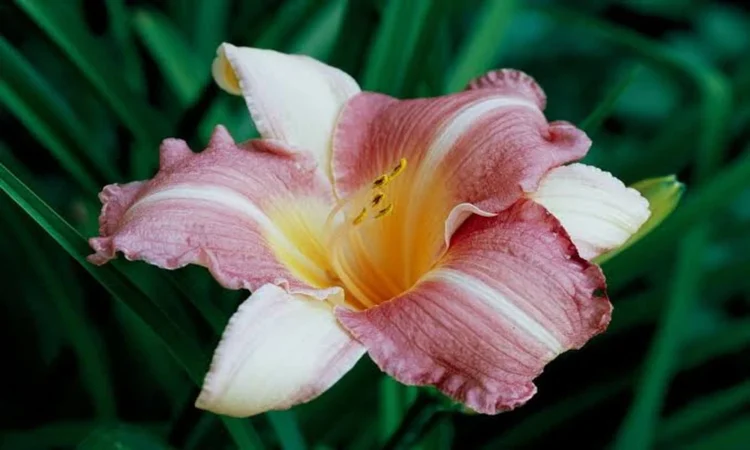

Walk along the border before deciding where a tall flower belongs. From one end, it may stand against a hedge; from the other, against the pale flowers of a neighbouring plant. A few steps can change a strong accent into something barely visible. Height gets the bloom into the view. Its surroundings decide what happens next.
For British gardeners building that higher layer, these eight suppliers list named daylilies at roughly 90cm or more in flower. Cream, very dark red, copper-orange and pale yellow give the layer different possibilities. The selection is concerned with how those flowers relate to the planting beneath and behind them, using each supplier’s height description for the particular offer.
Following the view through the planting
The working threshold is a published mature flowering height around 90cm or above. It refers to the flower stems, separately from foliage height and the size of a dispatched plant. Star of Galadriel opens the view in cream; Black Magic and Copper Windmill change its colour before Marion Vaughn and two lilioasphodelus offers return to paler flowers. The last two choices depend on local access. This order follows colour, season and purchase route through a border plan, with individual nursery estimates retained where accounts differ.
1. Swallowtail Daylilies
Among the Daylily plants for sale at Swallowtail Daylilies, Star of Galadriel places cream flowers near a metre high in a British border. The nursery lists thirty-eight-inch stems, approximately 96.5cm, with five-inch blooms and a green throat. That gives a pale upper accent a defined scale.
Start from the main viewing position. Against darker foliage, the cream could create a visible interruption above the lower planting. From a second viewpoint, it might echo pale flowers farther along the bed. Repeating that light colour at different depths could draw the eye into the border, with the green throat keeping a connection to the surrounding leaves.
The dark and copper choices that follow occupy much the same height band while changing the mood. Star of Galadriel is the pale option. The nursery supplies pot-grown material; give the eventual clump ground space and use stem height to plan where its flowers enter the view.
2. Strictly Daylilies
Black Magic needs a different background. Strictly describes very dark red-to-black flowers, 14cm across, on 97cm stems. Put that dark face against equally dark foliage and its outline may become difficult to read. A quieter, lighter area behind it could make the colour far more conspicuous.
Test more than one viewpoint. Black Magic might be striking from the path yet disappear from a window. Its height is close to Star of Galadriel’s, but darkness needs a different setting from cream.
Strictly supplies three to five bare-root fans, after growing the plants in containers. The purchase is therefore a division. For a gardener comfortable with that format, Black Magic offers a clearly measured tall accent whose success in the composition depends particularly on what sits behind its dark flower.
3. New Hope Daylilies
Copper Windmill opens the shape as well as warming the colour. New Hope lists copper-orange flowers 18cm across, with stems between 90cm and one metre. The broad reach gives the upper layer long lines and visible spaces around the petals.
Follow those spaces through to the planting behind. A fine-leaved background could participate in the flower’s outline, while another large flower at the same level might interrupt it. This is where a layered border becomes more than a set of rows. Plants can be seen through and around one another, so the relationship between front and back matters even when their heights are similar.
The height range gives room for that relationship to vary. Mark a band on the drawing rather than one exact horizontal line, then keep the copper colour connected with warmer notes elsewhere in the bed.
New Hope supplies two to three bare-root fans. Copper Windmill is a particular choice for the gardener who wants warmth and an expansive outline near the top of this working band. It offers a different upper-layer gesture from Black Magic’s dark face or the cream opening example.
4. Great Dixter
Now consider the same view in July and August. Great Dixter places Marion Vaughn in those months and lists a height of one metre. Its pale-yellow flowers could pick up lighter colours lower in the bed just as the later-summer planting becomes prominent. A 1-litre pot was the available option when reviewed.
Timing changes the background. A neighbour that looks perfectly placed in June may be taller, denser or finished by the time Marion Vaughn flowers. Picture the later arrangement before assigning it a gap. This offer is most persuasive where pale yellow at that season completes a view already being planned.
Other suppliers describe Marion Vaughn at different heights. Great Dixter’s one-metre account is the one used here, attached to its product. It supplies a potted route to the cultivar and a clear seasonal reason to choose it over an earlier pale species. The design question is therefore both where the flower appears and what will surround it when it does.
5. Burncoose Nurseries
Burncoose lists Hemerocallis lilioasphodelus at one metre and supplies a 1.5-2-litre pot. The yellow-flowered species offers a way to repeat one botanical identity through the higher layer, with the same name guiding later additions if the planting expands.
Imagine two or three positions visible successively along a curved path. The repeated flower could connect those views without requiring every position to look identical. The foreground changes as someone walks; the recurring yellow remains a familiar point within it. This is a different use of height from placing one specimen at the back and calling the layering complete.
The metre estimate belongs to Burncoose. Some nurseries give lower figures for the species, so leave tolerance in the plan and seek advice for the intended conditions if a strict minimum is essential. The specified pot range provides one practical starting format for a repeated planting. The next supplier offers the same species through smaller containers.
6. Crocus
At Crocus, the eventual-height guide for Hemerocallis lilioasphodelus is also one metre. The options include a 9cm pot and a pack of three. For a plan already calling for repeated positions, the three-plant format makes that intention straightforward to price.
Place the three eventual clumps on the drawing before choosing the pack. One might bring yellow into the near view, another repeat it farther back, and the third connect a bend in the border. Their heights can relate without putting all three in a straight line. Ground space and existing neighbours will decide whether those positions are workable.
This is a second purchase route for the same species introduced at Burncoose. Crocus offers smaller starting pots and an explicit grouped option; the floral identity remains the same. A gardener happy to establish smaller plants can therefore build the repeated yellow idea through this product, using the metre figure as an eventual guide rather than a description of the arriving parcel.
7. Hoo House Nursery
Hemerocallis citrina adds lemon-yellow flowers in July and August at a listed 100cm. Hoo House makes it a collection purchase, so this part of the plan depends on being able to obtain the plant locally. Enquire about citrina before fixing the order around it.
Citrina could continue a pale theme through the high layer in later summer, while retaining its own botanical identity. Seen above lower plants, the flowers might echo light notes nearer the path. Seen from farther away, the same stems could help join two pale groups that would otherwise appear separate.
Keep the flowering season in that imagined view. The neighbouring foliage needs to provide the intended setting in July and August, not merely look suitable when the order is planned. Hoo House’s height and month range give enough detail to ask that spatial question, while its collection arrangement determines whether this particular route to the species is practical.
8. Harley Nursery
Crimson Pirate finishes the view in red. Harley lists both height and spread at one metre and offers a 2-litre plant. That spread is a substantial ground allowance, so begin this placement at soil level before looking up towards the flowers.
Draw Harley’s metre-wide clump between the existing plants. Moving it farther back could solve a ground-space problem while changing the background behind its red flowers. Both the leaves and the view need to work.
Harley offers collection and local delivery to eligible postcodes within 20 miles of its Shropshire area. For a gardener able to use that service, Crimson Pirate supplies the red option at the end of the selection. Its metre-high description and specified pot provide a concrete purchase, with local access and ground space as the practical conditions.
Walk the border once more in imagination. Cream, dark red, copper and yellow can each occupy a high layer, yet each asks something different of the plants around it. Keep the flower that improves the important views, including the view from close beside the path. Layering becomes convincing when those relationships work as someone moves through the garden.
Source note: Heights, seasons, dimensions and sale arrangements come from the named suppliers’ official product pages. Spatial suggestions interpret those descriptions; flowering heights are not presented as measurements of the foliage or delivered plants.