

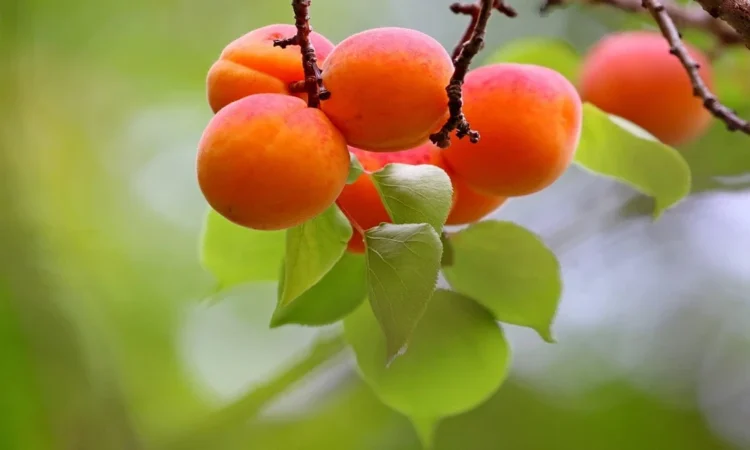

Fan trained apricot trees are chosen for a very particular kind of opportunity: a sunny wall, a warm boundary, and a gardener willing to guide growth with patience. They can be highly rewarding in the right place, but they are not a casual shortcut for every garden. The wall, aspect, soil, and care routine all matter.
The appeal is clear. A fan trained tree uses vertical space, brings blossom and fruit close to a warm surface, and can turn a boundary into a productive feature. The practical question is whether the site can support that promise. Apricots need warmth and attention, especially around blossom, training, watering, and summer management.
Fruit-Trees, the fruit tree specialists, explains that a fan trained apricot should be chosen around the wall first and the fruit second. Aspect, warmth, shelter, soil moisture, and training access all decide whether the tree will be manageable. Gardeners comparing suitable trained forms can use buy fan trained apricot trees once they know the wall receives enough sun and can support regular tying and pruning. That order keeps the decision practical and avoids treating the trained shape as decoration alone.
From that point, the choice becomes less about finding the most impressive tree and more about matching plant, position, and routine. The gardener who treats the site as the brief can compare options with a cooler eye, noticing whether each choice supports daily care, seasonal interest, and the kind of harvest that will actually be used. That steadier judgement is what turns a promising order into a tree with a believable future in the garden.
Judge the Wall Before the Tree
The wall is the growing environment for a fan trained apricot. Its aspect, stored warmth, shelter, and available width all influence the tree’s future. A sunny south or west-facing wall can offer useful warmth, while a shaded or exposed boundary may not justify the choice. The gardener should judge the wall honestly.
The risk is buying the trained form because it looks elegant without checking whether the wall supports apricot growth. A poor aspect can leave blossom vulnerable and fruit slow to ripen. The tree then asks for more effort than the site can repay.
A good wall should also be accessible. Training wires, pruning, tying, watering, and picking all require room to work. The wall is not a backdrop; it is part of the tree’s care system.
A practical way to use this check is to treat judge the wall before the tree as a decision point rather than as background information. The gardener can stand in the intended position, imagine the tree in leaf, and ask whether the same choice still feels sensible after several wet winters and dry summers. That simple pause often reveals whether the plan is genuinely robust or merely attractive while the tree is still young.
The most useful habit is to write down the answer to judge the wall before the tree before comparing varieties. A short note about soil, light, shelter, or access gives the gardener something concrete to return to when the shortlist becomes tempting. It keeps the decision anchored in the garden rather than in a moment of preference.
If the answer to judge the wall before the tree feels vague, the gardener should revisit the site before narrowing the tree choice. A clear answer at this stage prevents a string of small compromises later.
Give Blossom the Best Chance
Apricot blossom is one of the most important points in the growing year. It can appear early, which makes shelter and frost awareness especially important in UK gardens. A warm wall can help, but it cannot remove every risk. The gardener should think about cold air, blossom protection, and pollinator activity before planting.
The risk is assuming warmth alone solves the problem. A wall may warm the tree during the day but still sit in a garden where cold air gathers overnight. Blossom can be damaged before the season has properly begun.
Observation helps identify the safest position. Look at where frost lingers, how wind crosses the boundary, and whether spring sun reaches the wall early enough. These checks make the apricot choice more realistic.
This is where give blossom the best chance becomes part of long-term maintenance. Fruit trees reward gardeners who make ordinary care easy, because watering, pruning, checking ties, and watching growth all depend on repeated access. A choice that looks slightly more measured at the start often becomes the more generous choice later, because the tree is easier to manage and less likely to need correction.
That is why give blossom the best chance belongs near the start of the decision, not at the end. Once the tree has arrived, compromises become harder to avoid. Before the order is placed, the gardener can still change form, position, timing, or fruit type without losing a season.
If give blossom the best chance points towards a smaller, simpler, or better placed tree, that should be treated as useful guidance rather than a disappointment. A realistic tree is usually the one that lasts.
Plan Training Access From the Start
Fan training is a continuing relationship with the tree. The framework needs guiding, tying, and pruning so that branches remain balanced and light reaches the fruiting wood. The gardener must be able to stand comfortably near the wall and work along the full width of the fan. Access is therefore part of the design.
The risk is planting where the tree can be admired but not maintained. A narrow bed behind dense planting, a wall blocked by furniture, or an awkward corner can make training irregular. Once the framework becomes untidy, correction is harder.
Wires or supports should be planned before planting. The tree then grows into a prepared structure instead of waiting for improvised fixes. Good access makes the fan form a practical growing method rather than a decorative intention.
For UK gardeners, plan training access from the start should also be read through weather rather than through ideal conditions. A tree has to cope with cool springs, sudden dry spells, gusty boundaries, and the way light changes across the season. When that ordinary weather is part of the decision, the chosen tree is less dependent on luck and more connected to the site it will actually inhabit.
A second look at plan training access from the start also helps separate real limits from imagined ones. Some gardens look too small until a trained or compact form is considered, while other gardens look generous but have awkward shade or exposure. The best choice comes from that more honest reading.
If plan training access from the start reveals a weakness in the site, the gardener still has options. Position, form, timing, and variety can often be adjusted before the tree is ordered.
Balance Warmth With Soil Moisture
A sunny wall can create excellent warmth, but it can also create dry soil. Rain shadows, reflected heat, and nearby foundations may all reduce available moisture. Apricots need good drainage, yet young trees still require steady watering while they establish. The gardener should balance warmth with root care.
The risk is focusing only on the wall above ground. The tree’s roots are dealing with the soil below, and a dry strip at the base of a wall can stress growth quickly in warm weather. Watering access should be planned before planting.
Mulching can help conserve moisture, but it should be used with observation. The gardener needs to check actual soil moisture rather than assume the wall position is protected. Healthy roots support the blossom, leaves, and fruit that make the trained tree worthwhile.
The value of balance warmth with soil moisture is clearest when the gardener thinks beyond planting day. A young tree is easy to admire, but the established tree must be watered, shaped, harvested, and lived with. If the choice still feels practical after that future has been imagined, the planting has a stronger chance of becoming a settled feature rather than a hopeful experiment.
Thinking this way keeps balance warmth with soil moisture connected to use rather than theory. The tree is not being chosen for a label, a photograph, or a single attractive feature. It is being chosen for the way it will grow, crop, and fit into ordinary gardening over time.
If balance warmth with soil moisture confirms the original plan, the gardener gains confidence for the right reason. The choice has been tested against use, care, and the way the garden really behaves.
Keep the Framework Open and Useful
A fan trained apricot succeeds when the framework remains open, balanced, and reachable. The shape should allow light and air around the branches while keeping fruiting wood close enough to manage. This takes regular attention, especially as the tree settles and begins stronger growth. The framework should be understood as productive structure.
The risk is letting the tree become a flat thicket. Unmanaged shoots can crowd the wall, shade fruiting wood, and make picking harder. The beauty of the fan form depends on discipline as well as growth.
Summer management is often part of that discipline. Removing or shortening unsuitable shoots at the right time keeps the tree readable. A clear framework helps the gardener see what the tree is doing and respond calmly.
Good decisions around keep the framework open and useful also reduce waste. They prevent money, space, effort, and patience being spent on a tree that never quite fits. The aim is not to make the gardener cautious for no reason; it is to make the final choice feel deliberate, proportionate, and easier to support through the seasons when fruit trees prove their value.
When keep the framework open and useful is handled well, aftercare becomes less mysterious. The gardener knows why the tree was placed there, what to watch, and which signs of stress deserve attention. That knowledge is often more useful than a complicated routine.
If keep the framework open and useful changes the shortlist, the process has done its job. A better matched tree is worth more than a quick decision that needs correction after planting.
Decide Whether the Commitment Fits the Garden
A fan trained apricot is a commitment to a particular kind of gardening. It suits a gardener who enjoys seasonal observation, careful tying, and the reward of using a warm wall productively. It may be less suitable where the wall is hard to reach or the gardener wants a very low-intervention tree. Honesty at this point prevents frustration.
The risk is choosing the most attractive option without accepting its routine. A trained apricot can be rewarding, but it asks for attention at the moments that matter. The gardener should be ready for that rhythm.
When the commitment fits, the tree can become a distinctive feature. It brings blossom, structure, and fruit to a space that might otherwise be only a boundary. That is a strong result when the choice is made for the right wall and the right gardener.
By the end of the process, decide whether the commitment fits the garden should help the gardener describe why this particular tree belongs in this particular place. That answer does not need to sound technical. It simply needs to connect site, care, crop, and long-term use in a way that feels believable. A tree chosen with that clarity is easier to plant well and easier to keep caring for.
This final judgement around decide whether the commitment fits the garden gives the article’s advice its practical edge. The strongest choices are rarely rushed. They are built from small observations that make the tree easier to plant, easier to understand, and easier to keep in good condition.
If decide whether the commitment fits the garden leaves the tree with a clear role, the final decision becomes easier to defend. The gardener knows what the tree is for and how it will be supported.